Pages

Showing posts with label Lectures. Show all posts

Thursday, September 6, 2012

Thursday Theology : Love of God

There have been times when Christians found it easy to believe in the justice of God, but found it difficult to believe in the love of God. In most of the Western world, this is no longer the case. If people believe in God at all, they assume he is a God of love, but often presuppose largely sentimental conceptions of love, with little space for holiness, justice, or wrath. Moreover, believers have often embraced only one of the several ways the Bible speaks of the love of God, and read that one pattern into every biblical text that speaks of God's love, unwittingly producing some astonishingly nonsensical theology. This workshop by renowned New Testament scholar D.A Carson, attempts to explore some of the different ways the Bible speaks of the love of God, how they function, how they are integrated, and how they are related to all of the perfections of the God of the Bible.

OUTLINE
-------------

Introduction

(1) Some ways in which the Bible speaks of God's love:

     (a) God's intra-Trinitarian love

     (b) God's providential love

     (c) God's yearning, inviting, love

     (d) God's electing love

     (e) God's covenantal, conditional, love

(2) Some theological implications

(3) Some ethical implications for Christians

Conclusion

The Love of God    Listen  |  Download

Thursday, September 8, 2011

Thursday Theology : Biblical Theology Vindicated

Graeme Goldsworthy, Australian Anglican and Old Testament scholar is well known for his passion for biblical Theology. Goldsworthy was formerly the lecturer in Old Testament, biblical theology and hermeneutics at Moore Theological College in Sydney, Australia.  Speaking for the Gheens Lectures, delivered on March 18-20, 2008, at the Southern Baptist Theological Seminary, Goldsworthy spoke first on the necessity and viability of biblical Theology. Goldsworthy’s lecture has four points – 1. Biblical Theology and the doctrine of Scripture, 2. The role of the gospel in biblical theology, 3. Challenges to biblical theology and 4. Summary conclusion: The necessity of biblical theology.  

Goldsworthy defines the discipline of biblical theology as follows : “Biblical theology is the study of how every text in the Bible relates to every other text in the Bible. It is the study of the matrix of divine revelation. At the heart of the gospel is the person of Jesus Christ; he is the word of God come in the flesh. The nature of the gospel is such that it demands that it be at the centre of the biblical message. Biblical theology is, then, the study of how every text in the Bible relates to Jesus and his gospel. Thus we start with Christ so that we may end with Christ. Biblical theology is Christological, for its subject matter is the Scriptures as God's testimony to Christ. It is therefore, from start to finish, a study of Christ. Biblical theology is much more than simply relating the events of the story in chronological order, even if accompanied by theological comment in the process. It needs to be analytical of the theological dynamics within the big story. What is the nature of the progressiveness of revelation? Is it a gradual dawning of the light, or is it a series of discreet steps? What is the relationship between the two Testaments? In biblical theology there needs to be the kind of theological reflection that would help us to see the great recurring themes, both in their unity and their diversity. We observe the way in which the prophets deliberately recapitulate the earlier history of redemption in their eschatological projections. We seek to analyze the dynamics of prophetic fulfilment and typology. biblical theology involves first of all the close reading or exegesis of the parts in order to understand the theological perspectives contained. These must then be synthesized into an understanding of the unity of the theology of the whole canon. The wider synthesis will then affect our understanding of the significance of the parts. But, why should we have any confidence that such a task can be realized? Such confidence can only come from the gospel itself. The writers of the four Gospels point the way by their handling of distinct aspects of the relationship of the person and ministry of Jesus to the Old Testament Scriptures..”

This gospel-centered approach to biblical theology is what makes listening to Goldsworthy so profitable. Gaining insights from him would lead any pastor or even a lay Christian to see the “the coherence of the canon, its inner unity”, making our doctrine of scripture robust and mature. When one learns how everything in scripture is centered on the gospel and tastes the integrity of the canon in declaring the one good news of God, one cannot help but bow in rich adoration of the One Mind behind this wondrous Book. A high view of the Scriptures thus depend on one’s appreciation of the coherence of the canon. Goldsworthy notes, “our doctrine of Scripture, to be robust and maturing, needs to involve more than an abstract concept of authority and inspiration. It needs shape, and it is the gospel of our Lord Jesus Christ that gives it that shape. In this regard hermeneutics intersects with dogmatics, and both intersect with biblical theology. We cannot really have any useful concept of the authority of the Bible unless we have some notion of what the authoritative word is telling us. The doctrine of Scripture as the written word of God must focus on both authority and structure. The doctrine of the authority of the Bible demands the task of biblical theology, which is to seek to understand the structure of Scripture. “

This is a very excellent introduction to and vindication of this very vital theological discipline of biblical theology. Properly done, it would help Evangelicals regain an understanding of the gospel-centered structure of the Scriptures.  

The Necessity and Viability of Biblical Theology Listen |  Download  |  Read

Thursday, February 17, 2011

Introduction To Biblical Theology


Biblical Theology occupies a position between exegesis and systematic theology in the encyclopedia of theological disciplines.  It differs from systematic theology not in being more biblical, or adhering more closely to the truths of the Scriptures, but in that its principle of organizing the biblical material is historical rather than logical.  Whereas systematic theology takes the Bible as a completed whole and endeavors to exhibit its total teaching in an orderly, systematic form, biblical theology deals with the material from the historical standpoint, seeking to exhibit the organic growth or development of the truths of special revelation from the primitive preredemptive special revelation given in Eden to the close of the New Testament canon. [1]

In other words, biblical theology seeks to uncover the theology contained in the Bible itself, tracing the development of the Bible’s themes through redemptive history in its canonical shape.[2] It thus tracks the development of Bible’s doctrine along the redemptive historical storyline as it unfolds from the Law, Prophets, and Writings of the Old Testament into the Gospels and Acts, the Letters, and the Apocalypse in the New.

David Peterson, former Principal of Oak Hill Theological College, London, in his 2006 evening course on biblical theology covered the whole storyline of the Bible in 16 lectures. Peterson goes from creation to new creation tracking the major themes of the biblical metanarrative and brings forth with much clarity, the unity of the canon. The 16 lectures and the handouts are free for download. 

This series is definitely a good primer on biblical theology and is recommended for all thoughtful Christians.

Creation To New Creation : An Introduction To Biblical Theology

What is biblical theology? (1): Listen| Handout
What is biblical theology? (2): Listen
Creation and fall: Listen | Handout
The election and call of Israel: Listen| Handout
Israel under God's rule: Listen | Handout
David's kingdom and God's kingdom: Listen | Handout
Solomon and Israel's failure: Listen | Handout
The prophetic response: Listen | Handout
The promise of a new covenant: Listen | Handout 
The promise of a new temple: Listen | Handout
The blessing of the nations: Listen | Handout
The ministry of Jesus: Listen | Handout
Jesus' death and resurrection: Listen | Handout
The restoration of Israel: Listen | Handout
The ultimate fulfillment of God's plan (1): Listen | Handout
The ultimate fulfillment of God's plan (2): Listen

Footnotes
----------------
[1] G. Vos, Biblical Theology. Old and New Testaments (Eerdmans: Grand Rapids, 1948), Preface.
[2] James M. Hamilton Jr. and Jonathan Leeman, A Biblical Theology of Corporate Prayer

Thursday, December 16, 2010

The Disappearance of Theology


David Wells, Ph.D. is the distinguished Research Professor at Gordon-Conwell Theological Seminary in Massachusetts, U.S.A. Wells has a ThM from Trinity Evangelical Divinity School (1967), a PhD from the University of Manchester (1969), and post-doctoral Research Fellow from Yale Divinity School (1973-74). His penetrating reflections upon the church and the world makes his theology profound and thus for anyone who takes life and theology seriously, it is always a profitable experience to listen to him. 

In the Fall 1992 Francis A. Schaeffer Lectures at Covenant Theological Seminary, Wells made a case for the disappearance of theology in the Evangelical church. In the first lecture, he tries to show this by making a study of the subjects being discussed in popular Evangelical magazines and the types of sermons preached in Evangelical pulpits. The study clearly shows a decline in doctrinal preaching and a departure from anything of serious theological character. In the second lecture, Wells offers a triangle model for Evangelical ministry, made up of confessionalism, reflection and spiritual moral wisdom.  It is followed by a brief Q&A session. The fourth lecture(4A,4B) deals with the modern man’s constant obsession with the Self and how it has affected Evangelical ministry. The fifth lecture (5A) is on the professionalization of the clergy, where Wells explains how ministry has changed in its definition in our times and how this is dangerous to the practice of biblical ministry in Evangelical churches. The last two lectures(5B, 6A) briefly deal with the issue of biblical preaching. Wells makes a clarion call for having biblical priorities in our ministry and how recognizing the centrality of the preaching and teaching of the Word is absolutely crucial for any biblically faithful ministry in our churches.

Theologians, pastors and everyone who is aspiring to do biblically sound ministry would find Wells really helpful in his analyses, reflections and suggestions.  May the Lord bless Evangelical ministries to be known for their biblical fidelity, doctrinal richness and theological astuteness.

The Disappearance of Theology

Part 1     Listen | Download
Part 2     Listen | Download
Part 3     Listen | Download
Part 4 A  Listen | Download
Part 4 B  Listen | Download
Part 5 A  Listen | Download
Part 5 B  Listen | Download
Part 6     Listen | Download


Wednesday, December 1, 2010

The Achievement of The Cross


Swiss Reformed Baptist theologian Dr. Roger Nicole makes three studies on that doctrine which is at the core of Christianity – the atonement work of Lord Jesus Christ. J.I Packer once noted about Nicole as “Awesome for brain power, learning and wisdom; endlessly patient and courteous in his gentle geniality, and beloved by a multitude as pastor, mentor and friend." [1] True to this tribute, Dr. Nicole brings his thoroughness as a scholar in these three studies on the atonement which he did for the 1989 Desiring God Pastors conference.

In his first address, Dr. Nicole does a survey of the variety of words used in Scripture for the atonement work of Lord Jesus Christ. Dr. Nicole goes through three main words used in the New Testament viz. reconciliation, propitiation and redemption. There are many insights to be gained in this study with many expositions of verses which involve these words.

In his second study, Dr. Nicole focuses on the substitutionary nature of the atonement. In this study he considers inadequate theories of atonement which has been presented to the church in history, all of which deny the substitutionary nature of atonement.  He shows how they fail to answer some key questions to be answered by any theory of atonement and also how by their denial of substitution, they even lose support for that element of truth it claims to have.  Dr. Nicole's analysis of each system and his use of simple yet striking illustrations are very powerful and insightful.

Finally, in the third study, Dr. Nicole turns his attention to the scope of the atonement. His aim is to see whether the scriptures teach an universal or effectual atonement. He contends that these two categories – universal and effectual are mutually exclusive categories, if universalistic salvation is to be denied. Now there are Christians who deny universalistic salvation and yet hold to an universal and effectual understanding of the atonement.  They believe that the work of Jesus was intended for every single human being, yet in reality it is efficient in the case of the elect only. However if atonement is universal in nature and effectual only to the elect, then it implies that the efficacy of such a salvation is outside the work of Christ and depends on some other agency. For if efficacy is found in the work of Christ, then an universal atonement will yield an universal salvation. Historic Calvinists have approached this whole discussion on the scope of the atonement, with a biblical presupposition, that the efficacy of the atonement is entirely and exclusively found in the work of Jesus Christ. Hence atonement cannot be efficacious and universal at the same time.  For those who think this is mere human logic, Dr. Nicole goes through a myriad of scriptures to show how this understanding is exegetically valid. He also takes some of the common passages which are raised as an objection against this understanding and offers a detailed explanation in most of these cases. Again a very profitable and thorough study.

The information contained in these lectures is vast and detailed. Hence take note that this series demands attentive ears and engaged minds.  Recommended only for serious students of Scriptures.

1. The Biblical Variety of Language  Listen | Download
2. The Unifying Key: Substitution  Listen | Download
3. The Scope: Efficacy or Universality  Listen | Download

Footnotes
-----------
[1] Bailey, David W. SPEAKING THE TRUTH IN LOVE: Life & Legacy of Roger Nicole. Solid Ground Christian Books, 2006

Tuesday, November 16, 2010

Puritan Understanding of Sanctification

Dr. J.I Packer gives a thorough explanation of the Puritan witness to the doctrine and practice of sanctification in this three part lecture series. Packer initially lays some general guidelines on how we should learn from Puritans or any other group of Christians of a bygone age. He starts with warning us on merely imitating the Puritans in their diction or dense speech. He rather exhorts us to apply the same truths in our age. Through out this series, Packer is characterized by a nuanced approach, which as always is the mark of a true scholar. He does not have any presupposition that the Puritans are always right in what they say, but rather seeks to weigh everything in light of the Scriptures. He calls his preaching a Biblical Historical method of preaching. In the end he does vindicate the teachings of the Puritans and calls it a classic. Through out this series, he takes mainly one Puritan – John Owen, whom he considers to be the greatest of all Puritans as the Puritan spokesperson for their understanding of sanctification. 

The first in the series is an introduction to the theme of sanctification and so it is simply entitled “What is Sanctification”. Packer begins by unpacking what the shorter and larger Westminster Catechism says on sanctification. He then moves on to the Westminster confession and then to the Scriptures. This lecture is a very good introduction to this whole series.

In the second lecture, Packer concentrates on “Sanctification and the Fight”. Here he concentrates on why there is a fight involved in progressive sanctification. He first explains the reasons for the presence of this fight.  For this he takes Owen’s writings on indwelling sin, Satan and our fallen bodies. The second part of this lecture then concentrates on how we can effectively fight. It is presented in military terms and is very practical and useful in one’s private battle against sin. Here again it is Owen's brilliant exposition and practical wisdom that is used by Packer. 

The final lecture is titled “Assurance and Conduct” and focuses on what the Puritans thought about having “a well grounded assurance”. Here Packer explains from the Scriptures the different aspects of the doctrine of assurance and quotes what the Puritans said about each of these aspects. The precision and care that the Puritans displayed in their pastoral ministry is very evident in this study.

Highly recommend this series for all Christians. 
  
Puritan Understanding of Sanctification

  1. What is Sanctification?  Listen | Download
  2. Sanctification and the Fight  Listen | Download
  3. Sanctification and Assurance  Listen | Download


Thursday, November 11, 2010

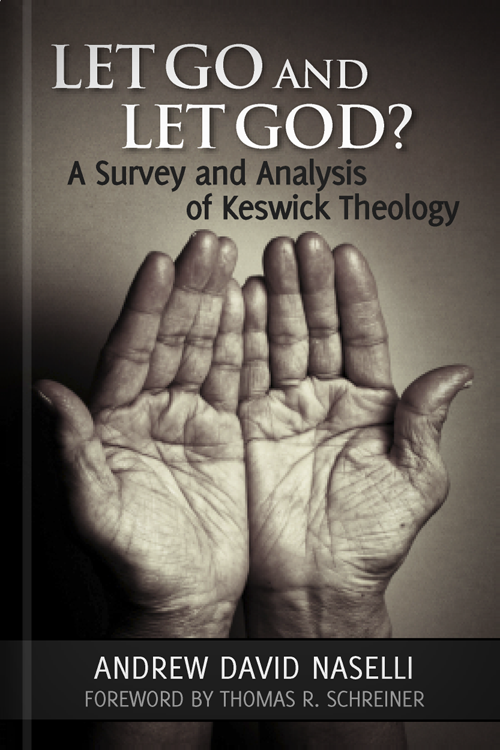
Pietistic Goofiness : Survey and Analysis of Keswick Theology

Whether or not you are familiar with the term Keswick theology, it is certain that you have come across it in one form or another. Keswick theology refers to the particular teaching of sanctification as a second blessing after salvation and then dividing professing Christians into two categories as those who have the blessing and those who don’t. If ever you have come across preachers who say that in the church there are two types of believers – those who have got victory over sin and those who are the defeated Christians, then be assured you have come across Keswick theology. Renowned theologian J.I Packer, who in his younger days was nearly destroyed by Keswick teachings  aptly calls it as “Pietistic Goofiness”.

Dr. Andrew David Naselli, Research Manager for D. A. Carson, has written an excellent book surveying and analyzing the Keswick theology called “Let Go and Let God? A Survey and Analysisof Keswick Theology”. He has two Ph.D’s and this book is actually his first dissertation.  

In an interview given to Kevin Deyoung, Andy as he prefers to be called, gives a brief history of Keswick as follows :

Keswick (pronounced KEH-zick) is a small town in the scenic Lake District of northwest England. Since 1875, it has hosted a week-long meeting in July for the Keswick Convention. In my book, “the early Keswick movement” refers to a movement  from 1875 to 1920  that was

  1. conservatively evangelical;
  2. based on and distinguished by the belief that the majority of Christians are living in defeat and that the secret to living the victorious Christian life is consecration followed by Spirit-filling; and
  3. stimulated by annual conventions at Keswick, England, and literature by its propagators.

So “Keswick theology” (as I use the term) refers to the view of sanctification shared by the prominent propagators of the early Keswick movement.

Beginning in the 1920s, the Keswick Convention’s view of sanctification began to shift from the view promoted by the leaders of the early convention. William Graham Scroggie (1877–1958) led that transformation to a view of sanctification closer to the Reformed view. Today its speakers include people like D. A. Carson and Sinclair Ferguson, whose views on the Christian life differ significantly from the Keswick Convention’s first generation. [1]

Andy does a first rate job in his analysis of Keswick theology. He not only points out the errors in their theology but also points out aspects of it which are worth emulating. 

In the preface of the book, he says:

This book’s thesis is simple: Keswick theology is not biblically sound. It demonstrates this by answering three basic questions:

Where did Keswick theology come from (chap. 2)?
What exactly is it (chap. 3)?
And why is this second-blessing theology not a blessing (chap. 4)?

If you’ve encountered some aspect of second-blessing theology, you’ll be fascinated to see how it fits in the story in chapters 2–3. And you’ll be challenged to consider its serious flaws in chapter 4. My goal is not to make you an arrogant know-it-all who pugnaciously goes on a second-blessing witch-hunt. My goal is to edify you by warning and equipping you. I’ll consider this book a success if it helps you understand second-blessing theology better, see why it’s not a blessing at all, and follow a better—more biblical—way in your Christian walk. [2]

 You can read the book’s front matter in this 31-page PDF, which includes twenty-one endorsements, the table of contents, Tom Schreiner’s foreword, and preface. 

In his site, Andy has graciously provided three full lectures he presented on Keswick theology at the Detroit Baptist Theology Seminary. The hand out, the power point presentation and the three mp3s are all available for free download here. It is worth listening to this historical survey and biblical analysis of Keswick theology from a Reformed perspective. Highly recommended for pastors.

Footnotes
---------------
[2] Let Go and Let God? A Survey and Analysis of Keswick Theology, Andy Naselli, Pg 30 
Related Posts Plugin for WordPress, Blogger...